Loading
SVG Brush Transition
Guide route changes with drawn SVG linework, giving illustrated and editorial sites a crafted transition between pages.
Published On: February 10, 2026
Last Updated: August 17, 2026
GSAPnext-transition-router
Overview
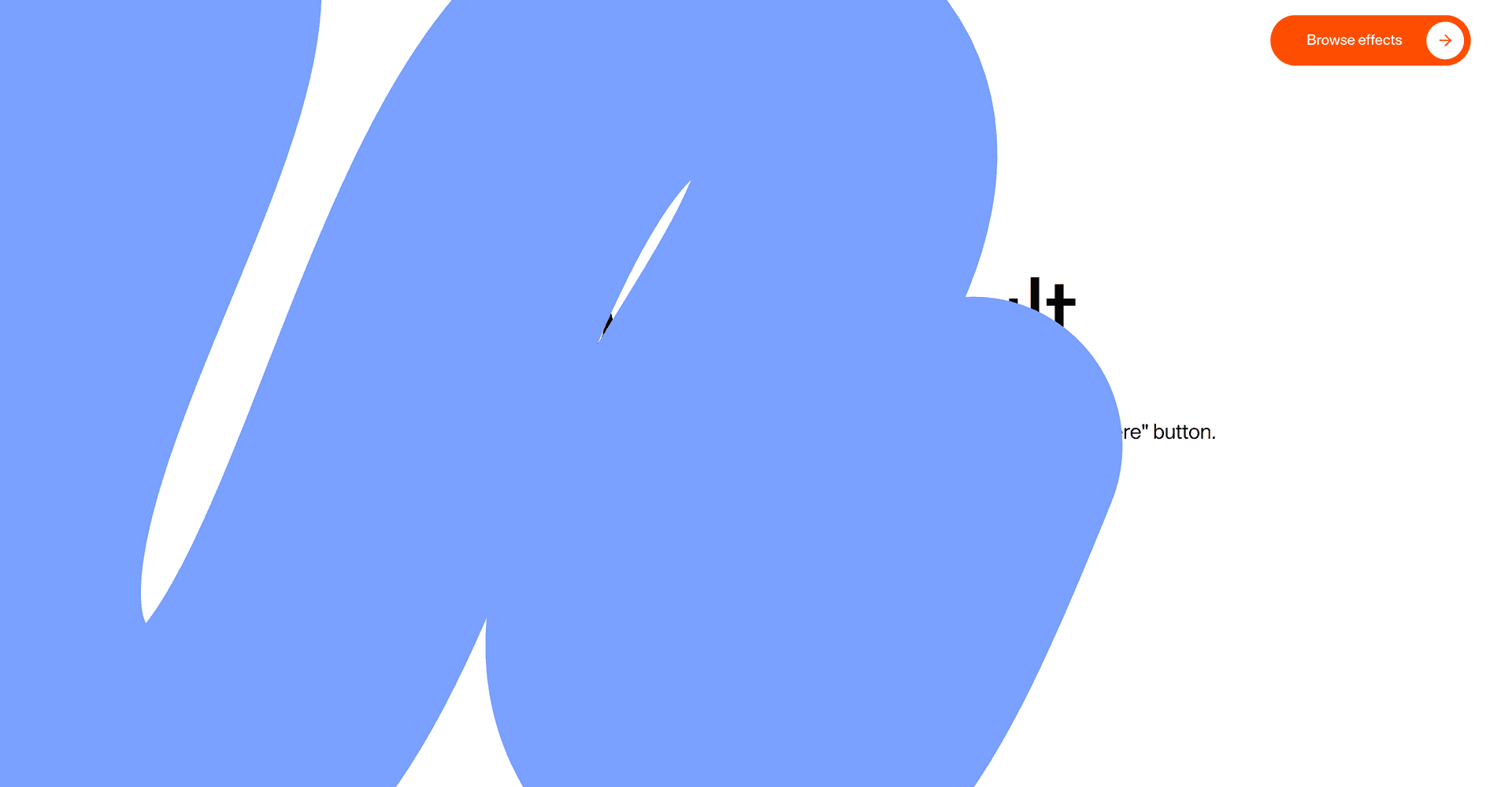
SVG Brush Transition turns the cut between routes into a designed moment. A line-drawn mask guides the visitor from one page to the next.
Use SVG Brush Transition on brand sites, portfolios, campaign pages, and editorial journeys where navigation should feel connected. The page job is continuity: the transition should make the change of route feel intentional without making the destination wait for applause.
The production risk is delay. Page transitions become a problem when they pretend to be loading states, trap focus, or run full-screen motion for people who asked for less motion. Mount the transition where route state actually changes, keep it short, restore focus after navigation, and provide an instant fallback.
Install Command
(Next.js App Router only. Requires next-transition-router for route-transition lifecycle hooks and must be wrapped in its provider. This effect will not function in plain React or in the Next.js Pages Router.)
This is a Pro Effect.
You can preview it now. Upgrade to Pro for instant install access.
Usage Code
This is a Pro Effect.
You can preview it now. Upgrade to Pro for instant install access.
Component Code
This is a Pro Effect.
You can preview it now. Upgrade to Pro for instant install access.
Example Production Use Case
An illustrated portfolio can use SVG Brush Transition between project pages so each route change feels like part of the visual language. The linework moves briefly, the next page appears, and focus lands where the visitor can continue. The outcome is continuity: the brand gets a crafted navigation moment without slowing the route.
Best Used For
- Illustrated brands where drawn linework already belongs to the design system.
- Portfolio and editorial route changes that should feel crafted but brief.
- Small navigation trees where the transition supports orientation instead of hiding latency.
Not For
Not for apps, docs, checkout, search, dashboards, or product flows where navigation speed is the feature.
Not for routes where visitors navigate repeatedly and would resent the same flourish every few seconds.
Performance Budget
Keep duration short, avoid artificial route delays, animate SVG properties with restraint, and do not block interactivity after the destination route is ready. A transition that overstays its welcome is just a branded door in the user’s face.
Accessibility and Mobile
Move focus to the destination main region or heading after navigation. Respect reduced-motion preferences with instant navigation or a short fade. On mobile, reduce mask complexity and avoid full-screen linework that delays orientation.
Common Mistakes
- Using SVG Brush Transition as fake loading delay.
- Forgetting focus restoration after navigation.
- Running full-screen motion for reduced-motion users.
- Making the SVG linework too complex for a route change that should last under a second.
Changelog
v1.1.0
Jul 21, 2026Added reduced-motion route fallback with short opacity fades.
v1.0.0
Feb 10, 2026Initial release
Props
| Prop | Type | Default | Description |
|---|---|---|---|
strokeWidth | number | 2 | Final brush stroke width after the covering wipe completes. |
strokeColor | string | #82A0FF | SVG brush stroke color. |
duration | number | 1.5 | Duration of the SVG brush draw and reveal animations. |
Frequently Asked Questions
When should I use SVG Brush Transition?
Use it when an illustrated, editorial, or campaign site needs a line-drawn route change that feels crafted without delaying navigation.
Where should SVG Brush Transition mount in the App Router?
Mount it where route changes can be detected and animated reliably, often through a route-transition wrapper, template, or transition provider rather than a static persistent layout.
How long should SVG Brush Transition last?
Keep it short, usually 300 to 600ms. Longer transitions need a real loading reason, not just a nicer mask.
How should focus work after SVG Brush Transition?
Move focus to the destination main region or heading after navigation completes. The transition should not leave keyboard users stranded on an element from the previous route.
What is the reduced-motion fallback?
Use instant navigation or a brief opacity change. Do not run full-screen masks, drawn paths, or sweeping motion for reduced-motion users.
Can Hyperiux adapt SVG Brush Transition for a real brand system?
Yes. A custom version should define line style, mask behavior, transition timing, focus restoration, mobile fallback, source handoff, and implementation notes for the specific route system.
Request a Custom Page Transition
Need a custom effect? Tell us what to create.


